The Rest Issue

Cop(e) + (a)esthetics

A free-range zine cataloguing the creative process, made in the between. An ode to my grandfather’s favorite saying.

“Everything’s copacetic.”

Issue 01 Las Vegas, Nevada November 2026

Rest is part of the practice.

On stillness, rooms that hold you, and staying in the work for the long run.

Photographs by Tatiana Donaldson
With Shay Riddick

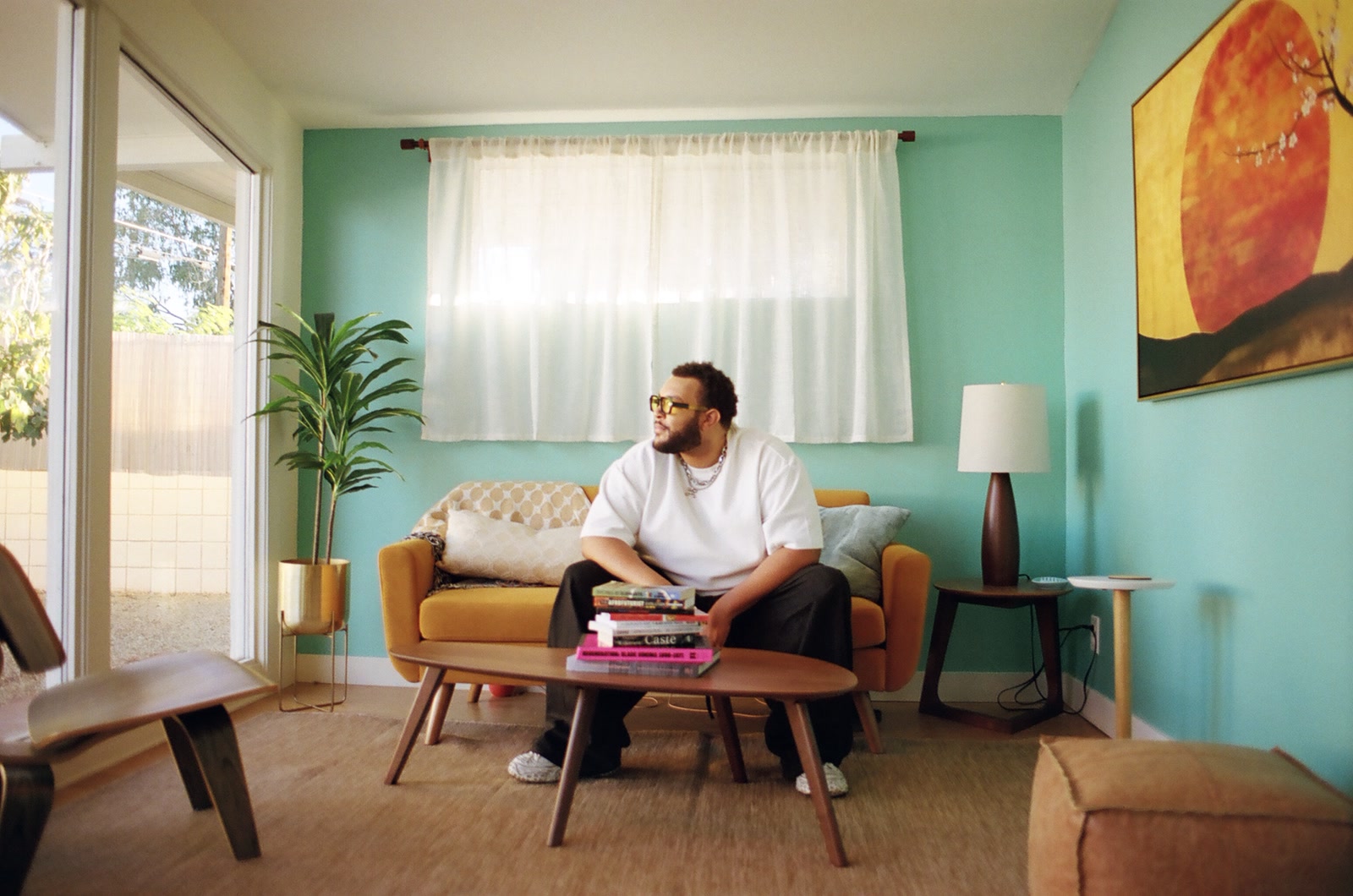
Shay sits on a mustard sofa against a turquoise wall, hands clasped, looking toward the light from a curtained window. A stack of books rests on the walnut coffee table in front.

Opening note

An afternoon with nothing to prove

These photographs were made in one session at Stardust One House in Las Vegas, on 35mm and medium format film. Nobody in them is performing productivity.

There is a sofa, a stack of books, a window with light coming through a curtain, and a person allowed to sit there.

Artists and organizers are rarely shown this way. We are pictured at the mic, at the march, at the opening, in the middle of making something. The hours that make those moments possible stay out of frame. This issue puts them back in.

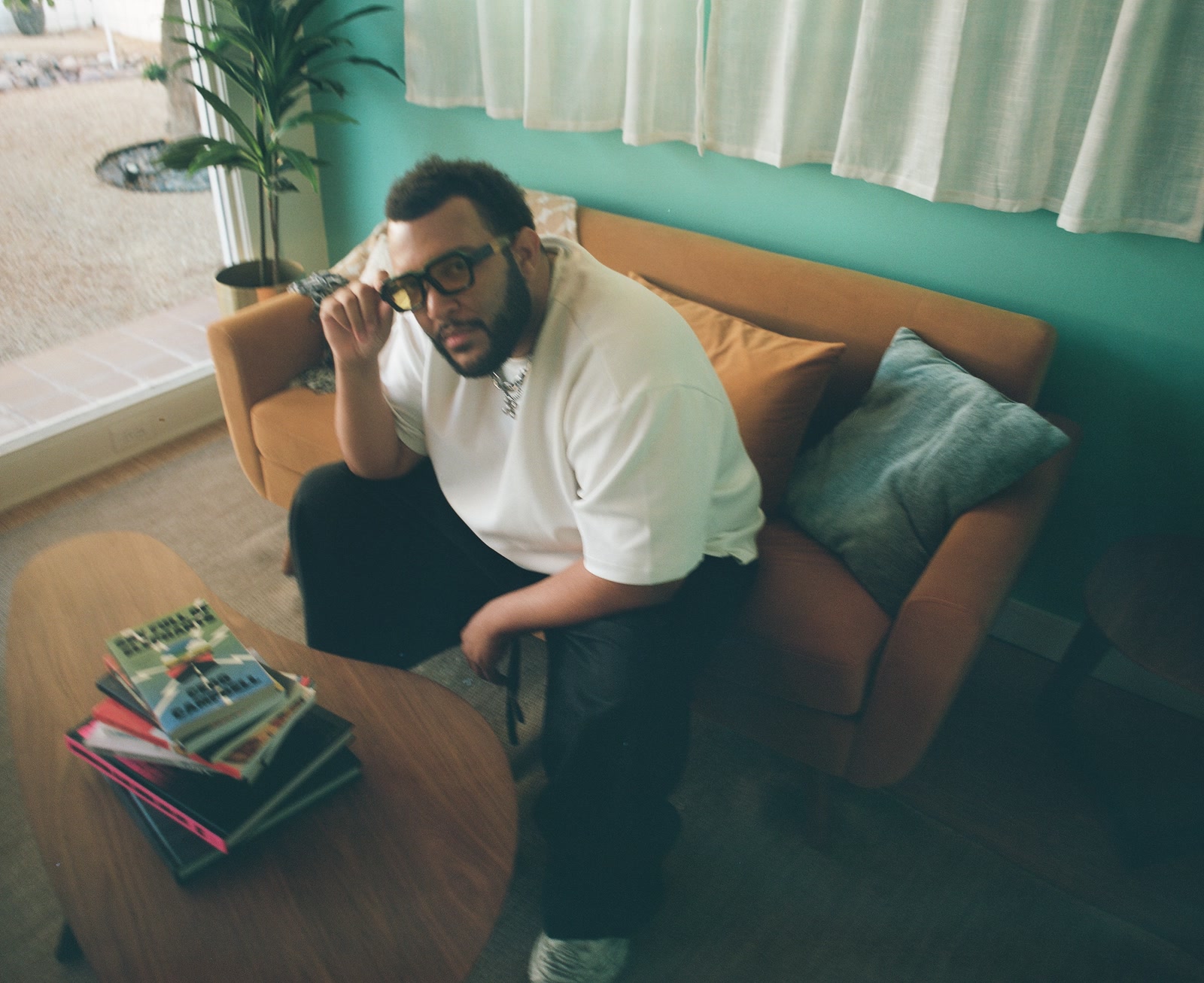
Seen from above, Shay leans forward on the sofa and adjusts dark-framed glasses, looking up at the camera. Books are stacked on the coffee table.
Plate 02The sofa, from above
rest.02
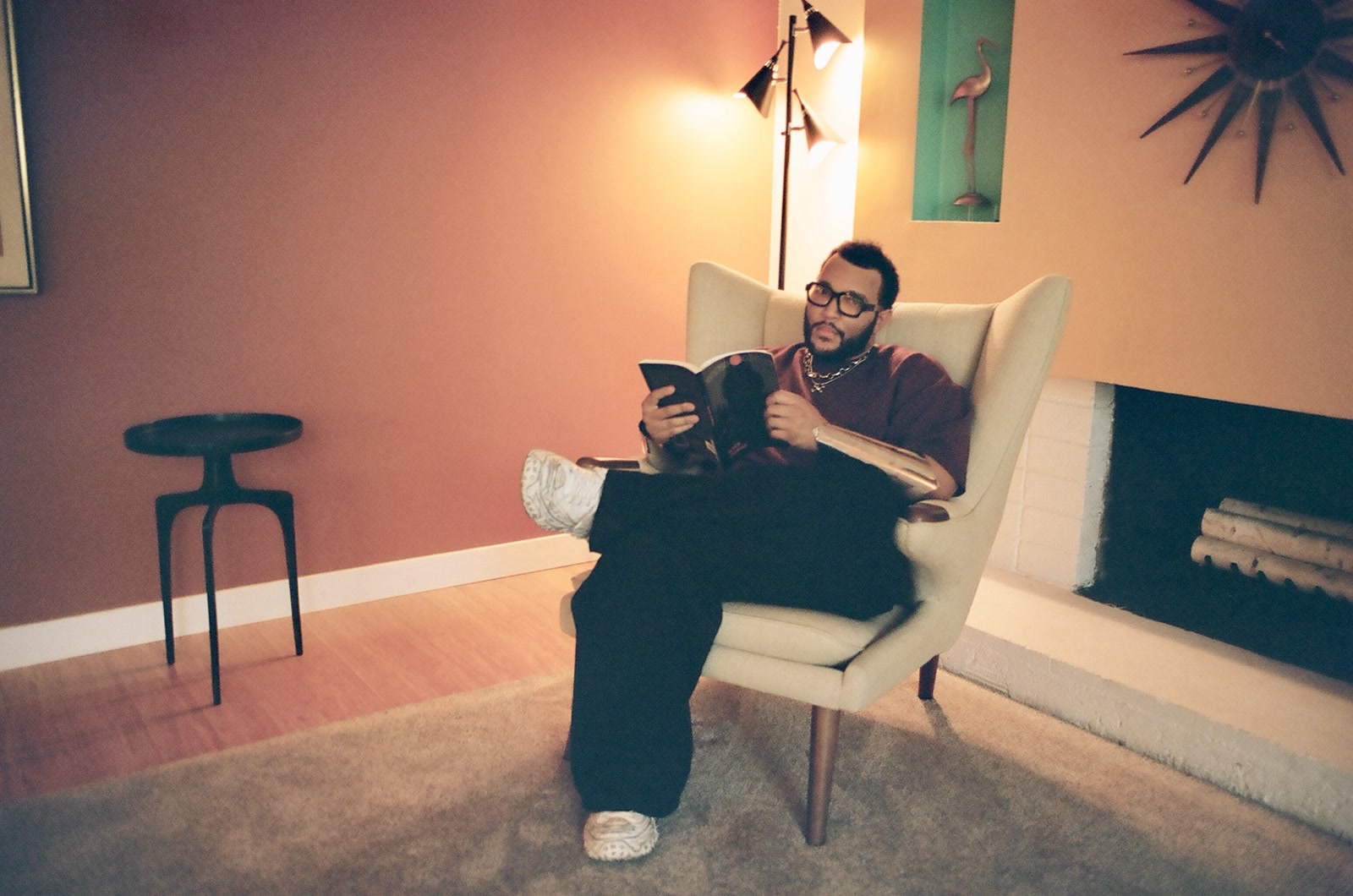
In a salmon-colored den lit by a floor lamp, Shay reclines in a cream wingback chair with one leg up, reading a paperback. A sunburst clock hangs on the wall.
Plate 03The den, lamp on

Stillness

The work keeps going when you stop

Ideas need time that looks like nothing. A melody resolves on a walk. A paragraph fixes itself overnight. The argument you could not land in the meeting arrives two days later in the shower.

Making art asks for attention, and attention refills slowly. Reading for pleasure, sitting with your feet up, letting an afternoon run long: this is how it refills. Skip it and the work gets thinner. You can hear it in the music before the maker admits to being tired.

rest.03
A wide view of a mid-century living room: turquoise walls, a mustard sofa, a walnut coffee table, a sliding glass door open to the yard. Shay sits on the sofa looking toward the daylight.
Plate 04The living room, door open

Room

A room can give permission

Rest needs a place. Somewhere the phone is face down, the light is soft, and no one is waiting on an answer.

It does not have to be a mid-century house with turquoise walls. It can be a corner of a bedroom, a porch, a parked car before you go inside. What matters is that the place asks nothing of you.

Resting where another person can see you takes trust. So does being photographed while you do it.

“Where the guard can come down.” Tatiana Donaldson, on the spaces she makes for a portrait
rest.04
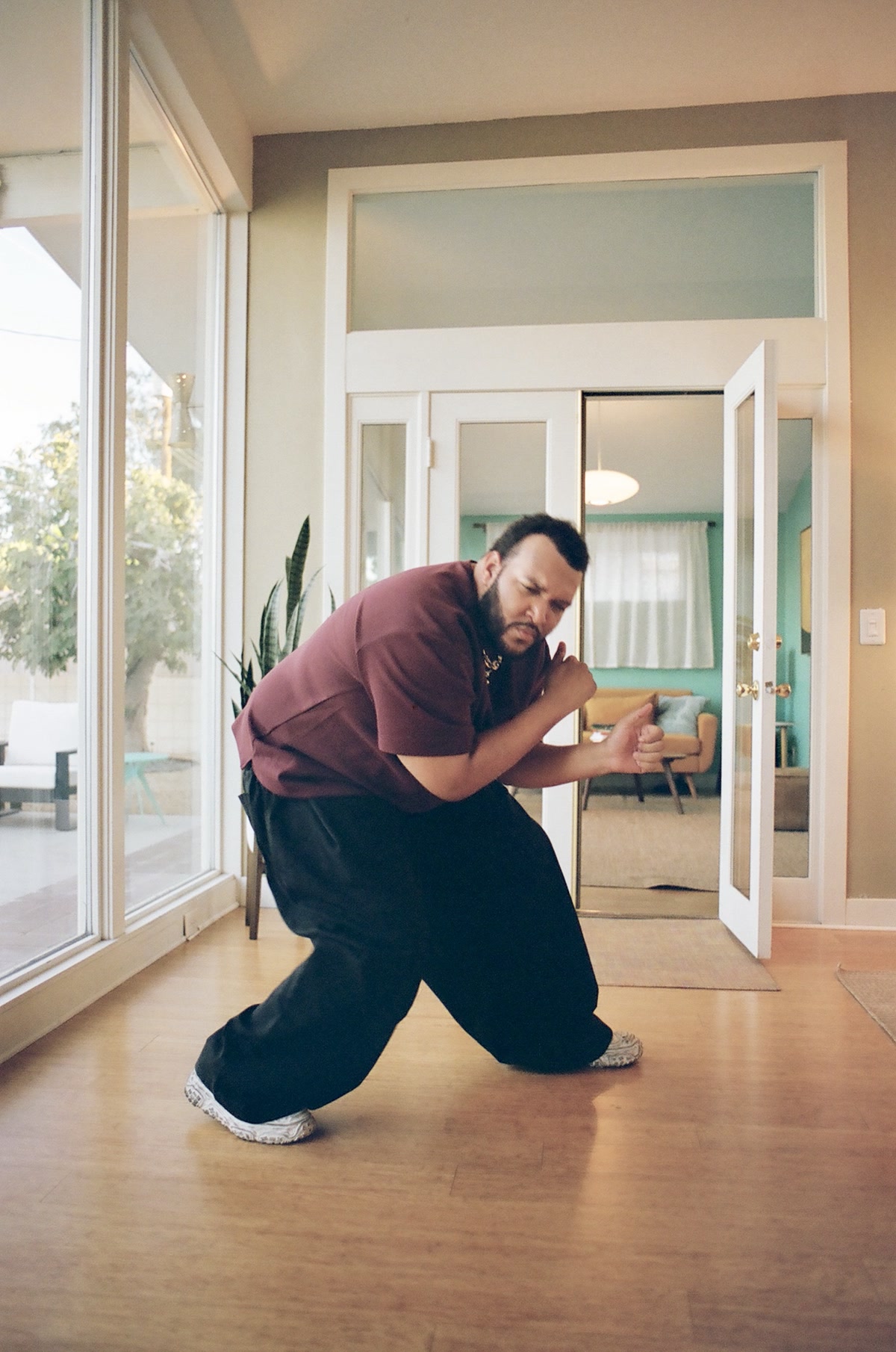
Shay drops into a low, wide dance stance on a wood floor beside a wall of glass, arms pulled in, eyes closed, mid-move.
Plate 05The hallway, mid-step

Body

Rest can

Stillness is one kind of rest. Play is another.

Dancing in a doorway with no audience, stretching, laughing at your own footwork: the body lets go of what it has been bracing against. No one is keeping score, so nothing has to be good.

People who carry heavy things for a living, in the studio or in the street, need ways to set them down that do not involve explaining anything.

rest.05

Analysis

The quiet around not working

Artists talk freely about process, influence, and money. We say very little about the weeks when nothing gets made. This is a look at that silence and what it costs.

The missing vocabulary

An artist's public record is a list of outputs: shows, releases, publications, grants. Bios, applications, and feeds all ask the question Janet Jackson made famous: “What have you done for me lately?” The time between works has no line on the form. So it goes unnamed, and what goes unnamed is hard to defend.

When rest does come up, it is usually framed as recovery. You rest so that you can produce again. That keeps production as the only real value and turns rest into its maintenance schedule. Procrastination gets even less room. It is treated as a private flaw and discussed in the language of self-help, as a discipline problem with an app for a cure.

Two things called procrastination

The word covers two different experiences. One is avoidance. The work matters, being judged for it is frightening, and so the studio gets cleaned for the third time. The other is incubation. In 1926 the psychologist Graham Wallas described creative thought in four stages: preparation, incubation, illumination, and verification. The second is a period spent away from the problem while the mind keeps working on it out of sight.

From the outside the two look identical. From the inside they feel alike too, because both arrive with guilt. Without a shared way of talking about them, an artist cannot easily tell which one they are in. Avoidance needs company and a smaller first step. Incubation needs to be left alone. Shame helps with neither, and it is the response most of us reach for.

Supply for an endless appetite

The pressure to produce does not come from art. It comes from an economy organized around consuming more than anyone needs, faster than anyone can make it. Platforms reward frequency. A feed is never full, so no amount of posting finishes the job. The artist becomes a supplier and the work becomes content, a word that describes art by the container it fills.

Jonathan Crary argues in 24/7 that sleep is one of the last parts of life the market cannot fully use, which is why it is always under pressure. Byung-Chul Han describes a society where nobody has to force us, because we push ourselves and call it freedom. Artists are exposed to both. There is no employer to blame and no closing time. The same phone holds the sketchbook, the storefront, and the audience.

What happens to intent and ritual

Intent is the answer to a plain question: why this work, and why now? Answering takes time in which nothing is being produced. Under constant demand the question changes. It becomes what will perform, what the audience expects next, what fits the release schedule. The work starts answering the market's appetite and stops answering the artist's own question.

Ritual suffers in a similar way. Ritual is repetition without efficiency: tuning the instrument, stretching the canvas, sweeping the floor before rehearsal, sitting with the page before writing on it. Its value is that it cannot be sped up. Productivity culture looks at a ritual and sees a workflow to optimize, and an optimized ritual is only a routine. The motions are the same. The attention that gave them meaning is gone.

Starting the conversation

A real discourse about rest would be practical. Artists would name fallow periods in public, the way farmers do, as part of how the land keeps giving. Collaborators would ask each other whether a delay is fear or gestation, and respond differently to each. Funders and residencies would pay for time without requiring a deliverable. Audiences would learn to read a gap between works as part of the work.

For artists who also organize, the stakes are the ones this issue keeps returning to. A practice that only knows how to produce will eventually produce what it is told to. Rest is where an artist remembers what they meant.

rest.06

The long run

Movements are measured in decades

Organizing runs on urgency, and the urgency is honest. The harm is real and it is happening now. But the work outlasts any one campaign, and people who never stop do not last long enough to see it through.

Audre Lorde, writing while she lived with cancer, called caring for herself self-preservation and an act of political warfare. Tricia Hersey built The Nap Ministry on the idea that rest is resistance to a culture that values people only for their output.

Both understood that an exhausted person is easier to defeat. A rested one can imagine something better, and imagination is what art and activism are both made of.

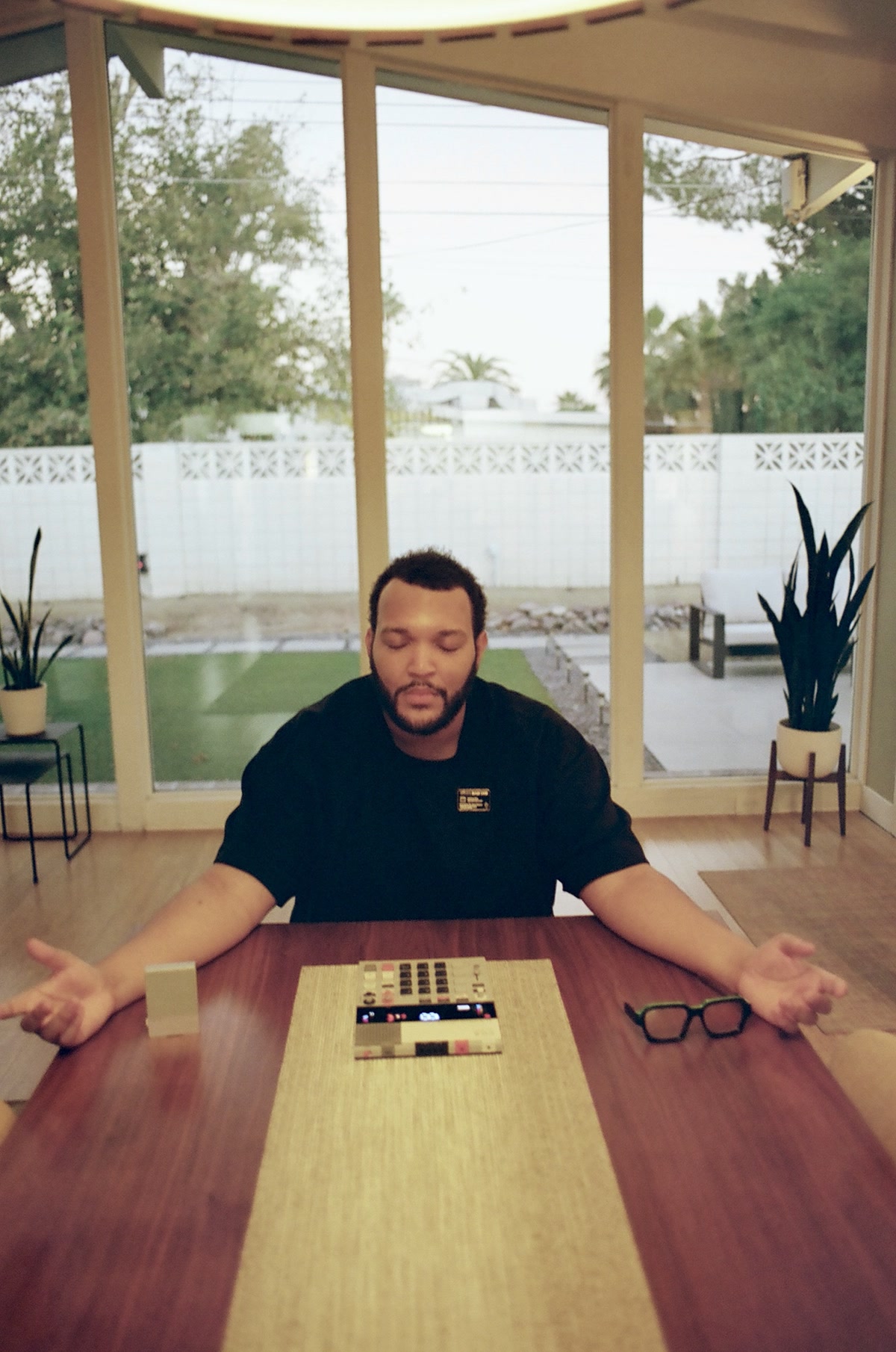
Shay sits at a long wooden table with eyes closed and both palms open and facing up. A small sampler and a pair of glasses sit on the table; behind, glass walls look onto a yard.
Plate 06The table, palms up
rest.07

Practice

Six ways in

rest.08

Behind the frame

Reel 01The dining room
Reel 02Room to room
rest.09

Mission Statement

Vol. 01 / The Rest Issue

“Everything’s copacetic.”

adjective

My grandfather says it when things are fine, and he says it when they aren’t yet, as a way of getting them there.

Cope is the living part: the waiting, the resting, the doubt, the long middle between one finished thing and the next.

Aesthetics is what I make of it: the photographs, the type, the color, the care taken over how a thing looks and feels. Put back together, the word is a practice. Making something beautiful is how I get through, and the getting through is worth making beautiful too.

Copacetic is a free-range zine that catalogs the creative process. It has no schedule and no fixed subject. It goes where the work goes. It lives in the between, while the grander work is still being made and nothing is ready to release.

It is a few small things at once: a journal, a digital pamphlet, a time still. Mostly it is a reminder to myself that the process counts, the pause counts, and everything’s copacetic.

Shay Riddick

CPC‑60 Copacetic Production Center

Start the loop, then touch the words, the letters or the pads. Whatever you play comes back round.

rest.11